

Description
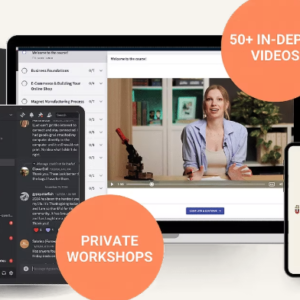
Polly Payne – Print School 2.0
The print-on-demand industry continues to create exciting opportunities for entrepreneurs who want to build online businesses without maintaining inventory or handling product fulfillment. Among the many educational programs available today, Polly Payne – Print School 2.0 has emerged as a comprehensive training system designed to help aspiring business owners create, launch, and scale profitable print-on-demand brands.
Whether you’re a complete beginner looking to enter the eCommerce world or an existing online seller searching for advanced growth strategies, this training program provides a structured roadmap that simplifies the process of building a sustainable business.
In this detailed guide, we’ll explore the key concepts, learning outcomes, benefits, and strategies covered throughout the program while examining why print-on-demand remains one of the most attractive business models in today’s digital economy.
What Is Print School 2.0?
Print School 2.0 is a specialized educational program created by Polly Payne, focusing on helping entrepreneurs establish successful print-on-demand businesses through proven systems, practical strategies, and actionable implementation techniques.
The course is designed to eliminate much of the confusion beginners face when entering the online business landscape. Instead of spending months trying to piece together information from multiple sources, students receive a structured framework that guides them through each stage of business development.
The training emphasizes:
- Product creation
- Niche selection
- Brand development
- Store setup
- Marketing strategies
- Traffic generation
- Customer acquisition
- Business scaling
- Automation systems
- Long-term growth planning
This comprehensive approach helps students develop a complete understanding of how a modern print-on-demand operation functions.
Understanding the Print-on-Demand Business Model
One of the biggest advantages of print-on-demand is its low barrier to entry.
Traditional retail businesses require:
- Inventory investments
- Warehousing
- Manufacturing
- Shipping logistics
- Supply chain management
With print-on-demand, products are only produced after customers place orders.
This means entrepreneurs can focus on:
Product Design
Creating attractive designs that resonate with target audiences.
Marketing
Driving qualified traffic to online stores.
Customer Experience
Building trust and loyalty among buyers.
Brand Development
Establishing recognizable businesses that stand out from competitors.
The model significantly reduces risk while providing opportunities for scalable growth.
Why Print-on-Demand Remains Popular
Several factors contribute to the continued growth of print-on-demand businesses.
Minimal Startup Costs
Unlike traditional eCommerce stores, entrepreneurs can launch without investing thousands of dollars in inventory.
Flexible Business Structure
Owners can operate from virtually anywhere with an internet connection.
Unlimited Product Possibilities
Businesses can sell:
- T-shirts
- Hoodies
- Journals
- Mugs
- Tote bags
- Posters
- Phone cases
- Home decor
- Accessories
Automated Fulfillment
Production and shipping are typically handled by third-party providers, allowing business owners to focus on growth.
Core Topics Covered Inside the Training
A major strength of the program is its focus on practical implementation rather than theory alone.
Niche Research and Validation
Choosing the right niche often determines the success of an online business.
Students learn how to:
- Identify profitable markets
- Analyze audience demand
- Evaluate competition
- Validate product ideas
- Discover underserved opportunities
Effective niche selection can dramatically improve conversion rates and profitability.
Brand Creation and Positioning
Building a recognizable brand helps businesses stand out in crowded marketplaces.
The training explores:
Brand Identity
Creating memorable visuals and messaging.
Target Audience Development
Understanding customer behaviors and preferences.
Market Positioning
Differentiating products from competitors.
Long-Term Branding Strategy
Developing a sustainable business rather than chasing short-term trends.
Product Design Fundamentals
Successful products require more than attractive graphics.
Students learn how to create designs that:
- Appeal to specific audiences
- Solve emotional needs
- Encourage purchasing decisions
- Increase perceived value
- Support brand consistency
The focus is on creating products customers genuinely want to buy.
Building an Effective Online Store
A professional storefront plays a significant role in converting visitors into customers.
Topics typically include:
Store Structure
Creating intuitive navigation and user-friendly layouts.
Product Listings
Writing persuasive descriptions that highlight benefits.
Conversion Optimization
Improving the shopping experience to increase sales.
Mobile Responsiveness
Ensuring stores perform well across all devices.
A well-optimized store can significantly improve customer engagement and overall revenue.
Traffic Generation Strategies
Even the best products cannot succeed without visitors.
The program emphasizes multiple traffic-generation methods designed to attract potential customers consistently.
Organic Marketing
Organic traffic strategies may include:
- Search engine optimization
- Content marketing
- Social media growth
- Community engagement
- Audience building
These methods help establish sustainable long-term visibility.
Paid Advertising
Paid traffic allows businesses to scale more rapidly.
Students may learn:
- Campaign setup
- Audience targeting
- Ad optimization
- Budget management
- Performance tracking
Understanding advertising fundamentals can help maximize return on investment.
Social Media Growth and Audience Building
Social platforms continue to influence buying decisions across virtually every industry.
Successful brands often use social media to:
- Build trust
- Showcase products
- Create communities
- Generate engagement
- Drive traffic
The training demonstrates how strategic content creation can strengthen brand awareness and customer relationships.
Creating High-Converting Product Pages
Product pages often determine whether visitors become buyers.
Important elements include:
Compelling Product Images
Professional visuals help increase perceived value.
Persuasive Copywriting
Strong messaging communicates benefits clearly.
Social Proof
Customer reviews and testimonials build credibility.
Strategic Calls-to-Action
Encouraging visitors to take the next step.
Small improvements in product page optimization can lead to significant increases in conversions.
Scaling a Print-on-Demand Business
Many entrepreneurs struggle to move beyond their first few sales.
The program addresses scaling strategies that may include:
Expanding Product Lines
Introducing complementary products.
Increasing Marketing Reach
Reaching larger audiences through multiple channels.
Leveraging Customer Data
Using insights to improve performance.
Automation Systems
Reducing repetitive tasks and improving efficiency.
Scaling effectively requires both strategy and systems.
Common Challenges New Sellers Face
Most beginners encounter similar obstacles when launching an online business.
These may include:
- Choosing the wrong niche
- Weak product designs
- Inconsistent marketing
- Poor website optimization
- Lack of customer understanding
- Unrealistic expectations
Structured education helps reduce costly mistakes and accelerates learning.
Benefits of Structured Learning
Many entrepreneurs spend months consuming free content without achieving meaningful results.
A structured curriculum offers several advantages:
Clear Roadmap
Students know exactly what to focus on.
Step-by-Step Guidance
Reduces confusion and overwhelm.
Proven Systems
Eliminates much of the trial-and-error process.
Faster Implementation
Allows students to take action more quickly.
The ability to follow a proven framework often increases the likelihood of long-term success.
Who Can Benefit From This Program?
This training may be suitable for:
Beginners
Individuals with little or no eCommerce experience.
Freelancers
Professionals seeking additional income streams.
Existing Store Owners
Business owners looking to expand product offerings.
Digital Entrepreneurs
People interested in building scalable online brands.
Content Creators
Creators seeking monetization opportunities through physical products.
The principles taught can be adapted to various business goals and experience levels.
The Future of Print-on-Demand
The industry continues evolving as consumer demand for personalized and unique products increases.
Key trends include:
- AI-assisted design workflows
- Personalized product experiences
- Improved fulfillment technology
- Faster shipping solutions
- Enhanced customer customization
Entrepreneurs who understand these trends can position themselves for future growth opportunities.
Final Thoughts
Polly Payne – Print School 2.0 provides a structured approach to building a modern print-on-demand business. By combining niche research, branding, product creation, marketing, and scaling strategies into a single educational framework, the program helps entrepreneurs develop the skills necessary to create sustainable online businesses.
For individuals interested in launching a low-risk eCommerce venture, understanding the principles covered throughout this training can provide valuable insights into today’s rapidly growing print-on-demand marketplace.
Success ultimately depends on consistent implementation, continuous learning, and a commitment to delivering value to customers. Those who apply proven strategies while maintaining a long-term perspective are often best positioned to achieve meaningful results in the competitive world of online commerce.




Reviews
There are no reviews yet.