
Description
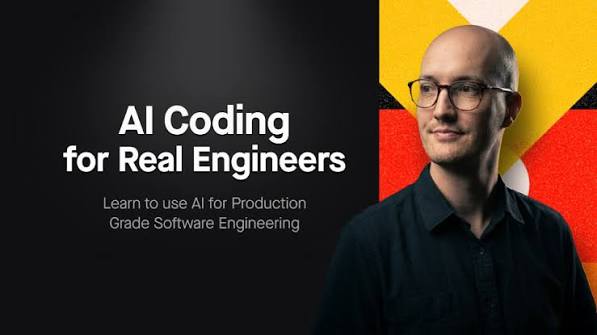
Matt Pocock – AI Coding for Real Engineers: Complete Course Overview
Artificial Intelligence is rapidly transforming the software development industry, changing how engineers write, debug, test, and deploy code. Matt Pocock – AI Coding for Real Engineers is designed specifically for developers who want to leverage AI effectively while maintaining high engineering standards. Rather than relying on AI blindly, this training focuses on practical workflows that help developers become more productive, efficient, and accurate in their daily coding tasks.
Modern engineers face increasing pressure to ship features faster, reduce bugs, maintain code quality, and adapt to new technologies. AI-powered development tools have become an essential part of the modern software engineering workflow, but many developers struggle to integrate them correctly. This comprehensive program bridges that gap by teaching real-world AI coding techniques that can be applied immediately in professional development environments.
Whether you are a frontend developer, backend engineer, full-stack programmer, software architect, or technical lead, the methodologies taught throughout this training can significantly improve your productivity and coding efficiency.
Why AI Is Changing Software Engineering
Software development has evolved dramatically over the last decade. Developers now have access to advanced AI assistants capable of generating code, explaining complex logic, suggesting optimizations, creating tests, and even helping with architecture decisions.
However, successful engineers understand that AI should complement human expertise rather than replace it. The most effective developers use AI strategically to eliminate repetitive tasks while maintaining complete control over software quality.
Key advantages of AI-assisted development include:
- Faster code generation
- Improved debugging workflows
- Enhanced documentation creation
- Accelerated learning of new technologies
- Better test coverage
- Reduced development time
- Increased engineering productivity
- Faster prototyping and iteration
The course emphasizes practical implementation rather than theoretical discussions, making it valuable for professionals who want immediate results.
What Makes This Training Different
Many AI coding resources focus primarily on prompts or basic chatbot interactions. In contrast, this program is designed for serious software engineers who work on production-level applications.
The training focuses on:
Engineering-First Approach
Instead of teaching shortcuts, developers learn how to maintain engineering excellence while using AI tools effectively.
Real Development Scenarios
Lessons are built around realistic coding challenges encountered in modern software teams.
Production-Level Workflows
Students discover workflows suitable for enterprise applications, startups, SaaS platforms, and large-scale systems.
Code Quality Preservation
A major focus is placed on ensuring AI-generated code remains maintainable, scalable, and secure.
Core Topics Covered
AI-Assisted Coding Workflows
One of the most important skills developers can learn today is how to collaborate effectively with AI coding assistants.
The training demonstrates how to:
- Generate clean code
- Refactor existing projects
- Improve code readability
- Create reusable components
- Automate repetitive tasks
- Enhance development speed
Developers learn how to provide context, structure requests, and evaluate AI-generated outputs critically.
Debugging with Artificial Intelligence
Debugging often consumes a large portion of a developer’s time. AI can significantly accelerate this process when used correctly.
Key debugging concepts include:
- Error analysis
- Stack trace interpretation
- Root cause investigation
- Performance issue detection
- Bug reproduction strategies
- Fix validation techniques
Students learn how AI can help identify hidden issues while still applying engineering judgment.
TypeScript Development
Matt Pocock is widely recognized for his expertise in TypeScript, making this training particularly valuable for developers working with modern JavaScript ecosystems.
Topics may include:
- Advanced TypeScript patterns
- Type inference optimization
- Generic programming
- Type-safe architectures
- Component typing
- API type generation
- Type debugging
Developers gain a deeper understanding of creating safer and more maintainable applications.
Prompt Engineering for Developers
Effective AI usage requires more than asking simple questions.
The course explores:
Context Building
Providing AI with sufficient project information.
Goal Definition
Clearly defining expected outcomes.
Constraint Management
Setting rules and boundaries for generated solutions.
Iterative Refinement
Improving outputs through multiple interactions.
These skills help developers achieve higher-quality results while reducing errors.
Building Better Software Faster
The primary goal of AI-assisted development is not merely generating code—it is delivering better software more efficiently.
Students learn strategies for:
- Accelerating feature development
- Reducing implementation time
- Improving consistency
- Enhancing maintainability
- Increasing development velocity
Organizations increasingly value engineers who can leverage AI without sacrificing quality standards.
Code Review Enhancement
Code reviews are essential for maintaining software quality.
AI can assist by:
- Detecting potential bugs
- Highlighting security concerns
- Identifying performance bottlenecks
- Suggesting refactoring opportunities
- Improving readability
Developers learn how to integrate AI into existing review processes while maintaining human oversight.
Test Generation and Automation
Testing remains one of the most critical aspects of software engineering.
The training demonstrates how AI can assist with:
- Unit test creation
- Integration test generation
- End-to-end testing strategies
- Mock creation
- Edge case identification
- Test coverage improvements
This can dramatically reduce the time required to build comprehensive testing suites.
Documentation Workflows
Poor documentation often creates long-term maintenance challenges.
AI can help developers generate:
- API documentation
- Component documentation
- Project setup guides
- Internal knowledge bases
- Technical specifications
- User-facing instructions
Students learn techniques for producing documentation that remains accurate and useful.
Modern Development Environment Integration
Today’s engineering teams use a wide variety of development tools.
AI-powered workflows can integrate with:
- IDEs
- Version control systems
- CI/CD pipelines
- Code repositories
- Project management platforms
- Testing frameworks
Understanding these integrations helps developers build streamlined and efficient workflows.
Productivity Without Sacrificing Quality
One of the biggest concerns surrounding AI coding tools is the risk of introducing low-quality code.
This training emphasizes:
Verification
Always validating AI-generated outputs.
Testing
Ensuring solutions behave correctly.
Refactoring
Improving generated code where necessary.
Architecture Review
Maintaining long-term scalability.
Security Auditing
Checking for vulnerabilities before deployment.
By combining AI assistance with engineering expertise, developers can achieve substantial productivity gains without compromising standards.
Benefits for Professional Engineers
Developers who complete this training can gain valuable skills that apply across industries.
Potential benefits include:
Faster Project Delivery
Reduce development cycles and accelerate releases.
Improved Technical Confidence
Learn to use AI tools effectively in professional environments.
Better Problem Solving
Leverage AI as a collaborative engineering partner.
Enhanced Career Opportunities
Employers increasingly seek engineers familiar with modern AI workflows.
Increased Efficiency
Spend less time on repetitive coding tasks.
Who Should Enroll
This training is suitable for:
- Frontend Developers
- Backend Engineers
- Full-Stack Developers
- TypeScript Developers
- JavaScript Engineers
- Software Architects
- Engineering Managers
- Technical Leads
- Startup Founders
- Freelance Developers
Both experienced engineers and intermediate developers can benefit from the practical methodologies presented throughout the course.
The Future of AI-Powered Engineering
Artificial Intelligence is no longer a futuristic concept in software development. It has become a practical tool that is reshaping how modern applications are built and maintained.
Engineers who understand how to combine technical expertise with AI-assisted workflows are positioned to gain a significant competitive advantage. The ability to generate, review, optimize, and validate code efficiently will become an increasingly valuable skill in the coming years.
Organizations are already adopting AI-enhanced development practices to improve productivity and accelerate innovation. Developers who master these techniques today will be better prepared for the evolving demands of the software industry.
Final Thoughts
Matt Pocock – AI Coding for Real Engineers provides a practical framework for integrating artificial intelligence into real-world software development. Rather than promoting shortcuts or replacing engineering fundamentals, the training teaches developers how to use AI responsibly and effectively.
By focusing on production-ready workflows, debugging strategies, TypeScript expertise, testing automation, code reviews, and engineering best practices, the course equips developers with the knowledge needed to thrive in the modern AI-powered development landscape.
For software engineers looking to improve productivity, accelerate development cycles, and stay competitive in a rapidly changing industry, this training offers valuable insights into the future of professional coding.



Reviews
There are no reviews yet.