
Description
Dr. BJ Fogg – Design for Behavior Change
In today’s fast-paced world, understanding why people act the way they do has become one of the most valuable skills for entrepreneurs, marketers, educators, leaders, and personal development enthusiasts. The science of behavior change provides a powerful framework for influencing actions, building habits, and creating sustainable transformation. One of the most respected experts in this field is Dr. BJ Fogg, whose groundbreaking work has shaped how organizations and individuals approach human behavior.
This comprehensive guide explores the principles, methodologies, and practical applications behind behavior design. Whether you’re looking to improve personal habits, increase customer engagement, enhance team performance, or create products that people love, these concepts provide actionable insights backed by years of research and real-world testing.
Who Is Dr. BJ Fogg?
Dr. BJ Fogg is a renowned behavior scientist, researcher, innovator, and founder of the Behavior Design Lab at Stanford University. His work focuses on understanding how human behavior works and how simple design principles can help people create positive and lasting changes.
Over the years, his research has influenced countless entrepreneurs, product designers, marketers, healthcare professionals, and business leaders. Many successful technology companies have adopted principles derived from his behavioral frameworks to improve user experiences and encourage beneficial actions.
His approach differs from traditional motivational theories by emphasizing simplicity, consistency, and systematic behavior design rather than relying solely on willpower or discipline.
Understanding Behavior Design
Behavior design is the practice of creating systems, environments, and experiences that encourage specific actions. Rather than forcing change through pressure or motivation alone, behavior design focuses on making desired actions easier and more natural.
The central idea is simple:
People change best when behaviors are easy to perform.
Many individuals struggle with habit formation because they focus on motivation while neglecting simplicity. Motivation fluctuates daily, but simplicity creates consistency.
Behavior design helps answer important questions:
- Why do people take action?
- Why do habits fail?
- How can organizations encourage positive behaviors?
- What makes behavior change sustainable?
- How can products increase engagement ethically?
By understanding these principles, individuals can create more effective personal routines and businesses can develop more user-friendly experiences.
The Foundations of Human Behavior
Human behavior is influenced by multiple factors, including:
Motivation
Motivation represents the desire to perform an action. It can come from internal or external sources such as:
- Personal goals
- Rewards
- Social approval
- Fear of consequences
- Emotional satisfaction
Although motivation can be powerful, it is often inconsistent. People feel motivated one day and unmotivated the next.
Ability
Ability refers to how easy or difficult a behavior is to perform.
Factors affecting ability include:
- Time required
- Financial cost
- Physical effort
- Mental effort
- Complexity
- Routine disruption
The easier a behavior becomes, the more likely people are to perform it consistently.
Prompts
A prompt is the trigger that initiates action.
Examples include:
- Phone notifications
- Calendar reminders
- Visual cues
- Verbal instructions
- Environmental signals
Without a prompt, even highly motivated individuals may forget to act.
The Behavior Model Explained
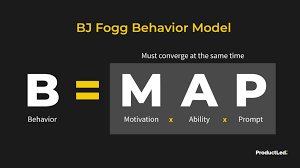
One of the most influential concepts in behavior science is the relationship between motivation, ability, and prompts.
For a behavior to occur:
- A person must be sufficiently motivated.
- The behavior must be easy enough to perform.
- A prompt must trigger the action at the right moment.
When these three elements align, action becomes significantly more likely.
This model is widely used in:
- Product design
- Marketing campaigns
- Employee engagement programs
- Educational systems
- Health interventions
- Personal development strategies
Organizations that understand this relationship can create more effective user experiences and communication strategies.
Why Most Habit-Building Methods Fail
Many habit-building approaches fail because they focus excessively on motivation.
Common mistakes include:
Setting Goals That Are Too Large
People often attempt drastic transformations overnight.
Examples include:
- Exercising two hours daily immediately
- Completely changing dietary habits
- Reading multiple books every week
- Launching large projects without preparation
These ambitious goals create resistance and reduce consistency.
Relying on Willpower
Willpower is a limited resource.
Stress, fatigue, distractions, and unexpected life events can quickly reduce self-control.
When behavior depends entirely on willpower, long-term success becomes difficult.
Ignoring Environmental Design
Environment strongly influences behavior.
For example:
- Healthy foods placed visibly increase healthy eating.
- Workout equipment placed nearby increases exercise frequency.
- Digital distractions reduce productivity.
Behavior design encourages modifying environments to support desired actions.
The Power of Tiny Habits
One of the most transformative ideas in behavior science is starting extremely small.
Tiny habits focus on creating behaviors that are so easy they require almost no motivation.
Examples include:
- One push-up per day.
- Reading one page of a book.
- Taking one mindful breath.
- Drinking one glass of water after waking up.
- Writing one sentence in a journal.
These actions may appear insignificant, but they create consistency and identity change over time.
Small successes generate momentum, confidence, and automatic behavior patterns.
Creating Sustainable Behavior Change
Successful behavior change follows several key principles.
Start Small
Reducing friction increases the likelihood of action.
Instead of:
“I will exercise for an hour.”
Try:
“I will put on my workout shoes.”
The goal is to establish consistency before increasing intensity.
Attach Behaviors to Existing Routines
Existing habits provide reliable anchors.
Examples:
- After brushing your teeth, stretch for one minute.
- After making coffee, review daily goals.
- After lunch, take a short walk.
This method creates natural behavioral connections.
Celebrate Success
Positive emotions reinforce behavior.
Celebration can be simple:
- Smiling
- Acknowledging progress
- Recording achievements
- Sharing success with others
Positive reinforcement helps the brain associate the behavior with reward.
Remove Obstacles
Identify barriers preventing action.
Questions to ask:
- Is the task too difficult?
- Does it require too much time?
- Is the process confusing?
- Can it be simplified?
Reducing obstacles dramatically increases consistency.
Applications in Business and Marketing
Behavior design principles have become essential in modern business.
Customer Acquisition
Businesses can improve conversions by:
- Simplifying registration processes.
- Reducing form fields.
- Providing clear calls-to-action.
- Removing unnecessary friction.
Customers are more likely to complete simple actions.
Product Engagement
Successful products guide users toward valuable actions through intuitive experiences.
Examples include:
- Onboarding sequences
- Guided tutorials
- Progress indicators
- Achievement systems
These elements encourage continued participation.
Customer Retention
Retention improves when products become part of a user’s routine.
Companies often create recurring prompts through:
- Email campaigns
- Mobile notifications
- Personalized recommendations
- Loyalty programs
When implemented ethically, these strategies improve user value and satisfaction.
Behavior Design in Leadership
Leaders can use behavior design to improve organizational performance.
Encourage Desired Actions
Instead of demanding results, leaders can make behaviors easier.
Examples include:
- Simplifying reporting systems
- Creating clear expectations
- Providing accessible resources
- Reducing unnecessary procedures
Build Positive Culture
Culture emerges from repeated behaviors.
Organizations can strengthen culture by:
- Recognizing achievements
- Encouraging collaboration
- Creating visible role models
- Reinforcing desired actions consistently
Increase Employee Engagement
Employees engage more when:
- Tasks are manageable.
- Goals are clear.
- Progress is visible.
- Success is acknowledged.
Behavior design provides practical tools for achieving these outcomes.
Behavior Design for Personal Growth
The principles of behavior change extend far beyond business.
Individuals can use them to improve:
Health
Examples include:
- Consistent exercise routines
- Better nutrition choices
- Improved sleep habits
- Stress management
Productivity
Behavior design supports:
- Time management
- Focus improvement
- Task completion
- Goal achievement
Learning
Students and professionals can improve learning through:
- Daily study routines
- Micro-learning sessions
- Consistent review schedules
- Structured practice
Small actions repeated consistently often outperform intense but irregular efforts.
Common Misconceptions About Behavior Change
Myth 1: Motivation Is Everything
Reality:
Motivation helps start behavior, but simplicity sustains it.
Myth 2: Change Requires Massive Effort
Reality:
Small actions often create larger long-term results.
Myth 3: Failure Means Lack of Discipline
Reality:
Many failures occur because behaviors are poorly designed rather than because people lack determination.
Myth 4: Habits Form Quickly
Reality:
Habit formation varies significantly based on context, frequency, and individual differences.
Consistency matters more than speed.
The Future of Behavior Design
As technology evolves, behavior design continues to influence industries worldwide.
Future applications include:
- Personalized education
- Digital health solutions
- Artificial intelligence systems
- Workplace productivity tools
- Consumer experiences
- Public health initiatives
Organizations increasingly recognize that understanding human behavior is essential for creating effective products and services.
The demand for professionals who understand behavior science continues to grow across multiple industries.
Final Thoughts
Understanding human behavior is one of the most valuable skills in modern life. The principles taught through behavior design provide practical tools for creating meaningful and lasting change in both personal and professional environments.
Rather than relying solely on motivation, successful behavior change focuses on simplicity, consistency, and well-designed systems. By making actions easier, attaching them to existing routines, and reinforcing success through positive experiences, individuals can create sustainable habits that endure over time.
Whether you’re building a business, leading a team, improving your health, or pursuing personal growth, behavior design offers a proven framework for achieving long-term results. The insights from this field continue to transform how people approach habits, decision-making, and performance across every area of life.
Recommended Reading: Explore advanced courses on habit formation, behavioral psychology, and personal development to deepen your understanding of behavior design and human decision-making.
Related Learning: If you’re interested in productivity, persuasion, marketing psychology, or self-improvement, consider exploring specialized training programs that expand on these principles and practical applications.





Reviews
There are no reviews yet.