
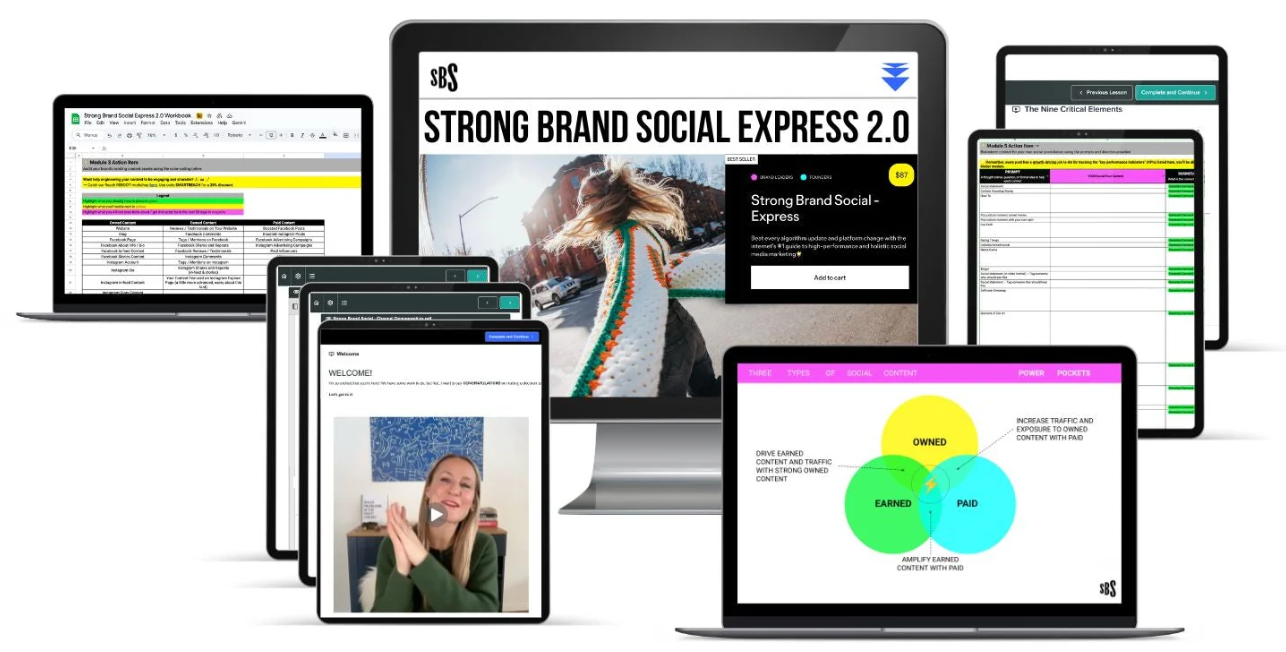
Description
Katie Wight – Social Media Analytics & Reporting Guide for Smarter Digital Growth
In today’s digital marketing landscape, businesses can no longer rely on guesswork to grow online. Data-driven strategies have become the foundation of successful marketing campaigns, and social media analytics now plays a major role in shaping brand decisions. Katie Wight – Social Media Analytics & Reporting focuses on helping marketers, entrepreneurs, agencies, and content creators understand how to measure performance effectively and transform raw social data into meaningful business insights.
Modern brands operate across multiple platforms including Instagram, Facebook, LinkedIn, TikTok, YouTube, Pinterest, and X. Each platform generates a massive amount of audience behavior data. Without proper analytics and reporting systems, companies struggle to identify what content performs best, where conversions originate, and how campaigns impact overall business growth.
This comprehensive guide explores how analytics and reporting frameworks can improve social media strategy, increase engagement, maximize return on investment, and help businesses make smarter marketing decisions.
Why Social Media Analytics Matters
Social media analytics is more than tracking likes and followers. It involves collecting, measuring, analyzing, and interpreting data from social channels to improve marketing performance.
Brands that leverage analytics successfully can:
- Understand audience behavior
- Improve content strategy
- Increase engagement rates
- Generate more leads
- Track campaign performance
- Measure conversion effectiveness
- Optimize advertising budgets
- Improve customer relationships
- Identify emerging trends
- Scale faster with accurate insights
Without analytics, businesses often waste time creating content that fails to connect with their audience.
The Core Components of Social Media Reporting
Effective reporting systems focus on actionable insights rather than vanity metrics. Strong reports help businesses understand what is working and what needs improvement.
Audience Analytics
Audience analytics helps marketers understand who their followers are and how they interact with content.
Key metrics include:
- Age demographics
- Gender distribution
- Geographic location
- Active hours
- Device usage
- Interests and behaviors
- Language preferences
Understanding audience data helps brands create highly targeted content that resonates with the right people.
Engagement Metrics
Engagement is one of the strongest indicators of content quality and audience connection.
Important engagement metrics include:
- Likes
- Comments
- Shares
- Saves
- Click-through rates
- Video watch time
- Story interactions
- Reactions
- Direct messages
- Profile visits
Higher engagement often signals stronger audience trust and improved algorithm performance.
Reach and Impressions
Reach measures the number of unique users who see content, while impressions represent total views.
Tracking these metrics helps marketers evaluate:
- Brand awareness
- Content visibility
- Campaign exposure
- Audience expansion
- Platform growth potential
When reach declines, it often indicates content fatigue or algorithm changes.
Conversion Tracking
Conversion analytics connects social media activity to business goals.
Conversions may include:
- Product purchases
- Lead generation
- Newsletter signups
- Webinar registrations
- App downloads
- Contact form submissions
- Consultation bookings
Businesses that track conversions can accurately calculate ROI and marketing effectiveness.
Building a Data-Driven Social Media Strategy
A strong analytics strategy starts with clear objectives. Brands should identify their primary goals before tracking metrics.
Common Social Media Goals
Brand Awareness
Focused on increasing visibility and audience growth.
Engagement Growth
Designed to improve interactions and community building.
Lead Generation
Targets potential customers and sales opportunities.
Website Traffic
Aims to drive users toward landing pages or blogs.
Sales Conversion
Focused directly on generating revenue.
Customer Support
Uses social platforms for communication and problem-solving.
Each goal requires different metrics and reporting structures.
Key Social Media Platforms and Their Analytics Features
Different platforms provide unique insights and reporting tools.
Instagram Analytics
Instagram offers valuable data related to:
- Reel performance
- Story interactions
- Audience retention
- Profile visits
- Content reach
- Follower activity
- Hashtag effectiveness
Reels and short-form video analytics are especially important for modern growth strategies.
Facebook Insights
Facebook analytics provides:
- Page performance
- Ad reporting
- Engagement analysis
- Audience targeting insights
- Video retention metrics
- Traffic sources
Businesses can combine organic and paid campaign data for deeper reporting.
LinkedIn Analytics
LinkedIn is essential for B2B brands and professionals.
Key metrics include:
- Professional audience demographics
- Content engagement
- Company page growth
- Lead generation effectiveness
- Industry targeting performance
LinkedIn analytics helps brands strengthen authority and professional networking strategies.
TikTok Analytics
TikTok focuses heavily on content discovery and viral reach.
Important TikTok metrics include:
- Video watch time
- Average completion rate
- Trending audio performance
- Audience retention
- Share rates
- Follower growth trends
Brands using TikTok analytics effectively can rapidly scale audience engagement.
Understanding ROI in Social Media Marketing
ROI measurement is one of the biggest challenges for marketers. Accurate reporting systems help businesses determine whether campaigns generate actual value.
Formula for Social Media ROI
ROI is typically calculated using:
(Revenue Generated – Marketing Cost) ÷ Marketing Cost × 100
Tracking ROI requires proper attribution systems and conversion monitoring tools.
The Importance of Custom Reporting Dashboards
Custom dashboards help marketers organize large amounts of data into simplified visual reports.
Benefits include:
- Faster decision-making
- Real-time performance tracking
- Better team collaboration
- Simplified client reporting
- Easier KPI monitoring
- Improved campaign optimization
Dashboards can combine data from multiple platforms into one centralized system.
Essential KPIs for Social Media Success
Key Performance Indicators help marketers focus on measurable outcomes.
Top Social Media KPIs
Engagement Rate
Measures how actively users interact with content.
Follower Growth Rate
Tracks audience expansion over time.
Click-Through Rate
Measures how often users click links.
Conversion Rate
Tracks completed business actions.
Cost Per Click
Measures advertising efficiency.
Customer Acquisition Cost
Calculates the cost of gaining new customers.
Return on Ad Spend
Measures advertising profitability.
Video Retention Rate
Tracks audience attention span.
Strong KPI tracking creates better long-term marketing strategies.
Content Performance Analysis
Not all content performs equally. Analytics reveals which formats generate the best results.
High-Performing Content Types
Short-Form Videos
Reels, TikToks, and Shorts often generate higher reach.
Educational Posts
Tutorials and guides improve engagement and saves.
Behind-the-Scenes Content
Builds authenticity and trust.
User-Generated Content
Increases credibility and social proof.
Interactive Stories
Polls and questions boost engagement.
Analytics helps marketers prioritize high-performing content categories.
Social Listening and Brand Monitoring
Modern reporting goes beyond platform analytics. Social listening tools track conversations happening across the internet.
Benefits include:
- Monitoring brand reputation
- Tracking customer sentiment
- Identifying industry trends
- Detecting competitor activity
- Discovering audience pain points
- Improving customer relationships
Social listening strengthens brand positioning and audience understanding.
Competitor Analysis in Social Media Reporting
Analyzing competitors provides valuable insights into market trends and content opportunities.
Key areas to monitor include:
- Posting frequency
- Engagement levels
- Audience growth
- Content formats
- Hashtag strategies
- Ad campaigns
- Influencer collaborations
Competitive analytics helps businesses stay ahead in crowded industries.
Automation in Analytics and Reporting
Automation tools simplify complex reporting processes and save time.
Benefits of Automated Reporting
- Real-time updates
- Reduced manual work
- Faster data collection
- Improved accuracy
- Easier scalability
- Better workflow efficiency
Many businesses use automation to generate weekly or monthly reports automatically.
Common Social Media Analytics Mistakes
Many marketers focus on the wrong metrics or misinterpret data.
Mistakes to Avoid
Tracking Vanity Metrics Only
Follower counts alone do not indicate success.
Ignoring Conversion Data
Engagement without conversions limits business growth.
Inconsistent Reporting
Irregular analysis prevents strategic improvement.
Not Testing Content
A/B testing improves campaign performance.
Overlooking Audience Behavior
Ignoring customer interests reduces engagement potential.
Avoiding these mistakes improves long-term campaign effectiveness.
Advanced Reporting Strategies
Advanced analytics involves deeper data interpretation and predictive insights.
Advanced Techniques Include
- Funnel analysis
- Cohort tracking
- Attribution modeling
- Predictive analytics
- Heatmap tracking
- Customer journey mapping
- AI-powered reporting
- Sentiment analysis
These strategies help businesses gain a competitive advantage.
The Future of Social Media Analytics
The future of analytics is increasingly powered by artificial intelligence and machine learning.
Emerging trends include:
- AI-generated insights
- Predictive audience behavior
- Automated optimization
- Cross-platform attribution
- Voice and visual search tracking
- Real-time personalization
- Advanced customer segmentation
Businesses adopting modern analytics systems early will likely outperform competitors.
How Reporting Improves Decision-Making
Strong reporting systems provide clarity for business decisions.
Executives and marketers can:
- Allocate budgets more effectively
- Improve campaign performance
- Scale successful strategies
- Eliminate underperforming tactics
- Increase profitability
- Understand customer preferences
Analytics transforms social media from a branding tool into a measurable growth engine.
Best Practices for Effective Social Media Reporting
To maximize reporting value, marketers should follow structured practices.
Recommended Best Practices
- Set clear objectives
- Define measurable KPIs
- Use consistent reporting periods
- Focus on actionable insights
- Compare historical performance
- Simplify report presentation
- Combine qualitative and quantitative data
- Test and optimize regularly
Consistent reporting creates better long-term results.
Final Thoughts
The digital marketing industry continues evolving rapidly, and businesses that rely on intuition alone often struggle to compete. Katie Wight – Social Media Analytics & Reporting highlights the importance of data-driven marketing strategies that help brands understand audience behavior, improve engagement, and generate measurable business growth.
Analytics and reporting are no longer optional for modern businesses. They are essential tools for building effective campaigns, maximizing ROI, improving customer relationships, and scaling long-term success.
By understanding metrics, tracking conversions, optimizing content, and leveraging advanced reporting systems, brands can create smarter marketing strategies that produce real and sustainable results in today’s competitive online environment.




Reviews
There are no reviews yet.